

Roughly 88% of online consumers say they will not return to a website after a bad experience, according to research cited by HubSpot. If you run a small business in Australia and your site is slow, unclear, or dated, you are almost certainly haemorrhaging leads without knowing it. A small business website Australia owners rely on needs to do more than look presentable. It needs to convert visitors into paying customers. This article breaks down the five most damaging signs your website is working against you, and gives you the exact fixes that actually move the needle.
Table of Contents
- Quick Takeaways
- Sign 1: Your Pages Load Too Slowly
- Sign 2: Visitors Have No Idea What to Do Next
- Sign 3: Your Site Breaks on Mobile
- Sign 4: The Design Looks Like It Is from 2013
- Sign 5: You Are Invisible on Google
- Comparing Your Fix Options
- Frequently Asked Questions
- References
Quick Takeaways
| Key Insight | Explanation |
|---|---|
| Page speed directly impacts revenue | A one-second delay in load time can reduce conversions by up to 7%, according to Ahrefs data. Every extra second costs you money. |
| Unclear CTAs are silent conversion killers | If your homepage does not tell visitors exactly what to do in five seconds or less, most will leave without acting. |
| Mobile experience is non-negotiable | Over 60% of Australian web traffic comes from mobile devices. A site that does not work on phones is a site that does not work. |
| Outdated design destroys trust instantly | Stanford research shows 75% of users judge a company’s credibility based on its website design. First impressions happen in 50 milliseconds. |
| Local SEO is your most underleveraged growth channel | Appearing in Google’s local 3-pack can drive more qualified traffic to a Melbourne business than any paid ad on the same day. |
| DIY platforms have a conversion ceiling | Template-based builders limit speed, custom functionality, and SEO control. Custom WordPress or Webflow sites consistently outperform them on conversion metrics. |
| Ownership of your website matters | If you cannot export your own files, your agency owns your business asset. Always confirm you retain full ownership of all deliverables before signing anything. |
Sign 1: Your Pages Load Too Slowly

Page speed is not a technical vanity metric. It is a direct driver of customer behaviour. Google’s own data shows that as page load time goes from one second to ten seconds, the probability of a mobile visitor bouncing increases by 123%. For a small business site running unoptimised images, bloated plugins, or cheap shared hosting, that is a catastrophic amount of lost traffic.
In practice, the most common culprits behind slow Australian small business websites are oversized images uploaded directly from a phone or camera, too many third-party scripts loading on every page, and hosting plans chosen on price alone. A AU$5 per month hosting plan is not saving you money if it costs you customers.
How to Fix Slow Page Speed
Start with Google PageSpeed Insights. Type in your URL and you will get a real score plus a prioritised list of what to fix first. The most high-impact actions are compressing images using a format like WebP, removing plugins or scripts you are not actively using, and switching to a quality hosting provider with Australian servers.
A professionally built conversion-focused website from a digital agency Melbourne businesses trust will handle these technical layers during the build, not as an afterthought. Sites built on WordPress or Webflow with proper architecture consistently score above 85 on PageSpeed, which is the threshold where bounce rates start to drop meaningfully.
Pro tip: Test your site speed from an Australian connection, not a US-based tool server. GTmetrix lets you choose a test location. Sydney and Melbourne servers give you the most accurate picture of what your actual customers experience.
Sign 2: Visitors Have No Idea What to Do Next
A common mistake is assuming that if someone lands on your homepage, they already know what they want to do. They do not. Website visitors follow the path you build for them, and if that path is unclear, they leave. This is not a design preference issue. It is a revenue issue.
The data consistently shows that websites with a single, prominent primary call to action convert better than those cluttered with five different options. HubSpot research found that personalised and prominent CTAs convert 202% better than generic ones. Yet most small business websites in Australia have either no clear CTA above the fold, or three competing ones that dilute each other.
What a High-Converting CTA Actually Looks Like
It is specific, not vague. “Get a Free Website Audit” outperforms “Learn More” every time. It is placed where the eye lands first, which is typically in the top right of the navigation and repeated in the hero section. It uses contrast so it stands out from the surrounding design without looking like a flashing banner ad from 2003.
For service businesses in Melbourne, the most effective CTAs are tied to low-friction offers: a free consultation, a quoted price, or a brief discovery call. Remove the barrier. The goal of the CTA is not to close the sale. It is to start a conversation.
“Companies with 10 to 15 landing pages see 55% more leads than those with fewer than 10. The more targeted your pages and CTAs, the better your results.” – HubSpot Marketing Research
Sign 3: Your Site Breaks on Mobile
Pull up your website on your phone right now. Not in a desktop preview on your laptop. On your actual phone. If the text is too small to read without zooming, if buttons are too close together to tap accurately, or if the layout looks like it was squashed rather than designed for mobile, you have a serious problem.
Statista data shows that mobile devices account for approximately 60% of global website traffic. In Australia, that figure is consistent with the global trend. Google also uses mobile-first indexing, which means the mobile version of your site is what Google evaluates for ranking purposes. A broken mobile experience does not just frustrate users. It directly suppresses your search visibility.
The Difference Between Responsive and Actually Mobile-Friendly
A site being technically responsive does not mean it is well-designed for mobile. Many template-based sites are technically responsive but were clearly designed for desktop first, with tiny font sizes, cramped navigation menus, and hero images that cut off badly on a small screen.
A purpose-built web design Melbourne approach starts from mobile and scales up, not the reverse. This means designing tap targets that are at least 44 by 44 pixels, using font sizes no smaller than 16px for body text, and testing on real devices before launch, not just browser emulators.
Pro tip: Use Google Search Console’s Mobile Usability report to see exactly which pages have mobile issues flagged by Google. Fix those first, starting with your homepage and main service pages.
Sign 4: The Design Looks Like It Is from 2013
Stanford’s Web Credibility Research Center found that 75% of users make judgements about a company’s credibility based solely on website design. That judgement takes approximately 50 milliseconds. You do not get a second chance at that first impression, and no amount of great service reviews will overcome a website that looks abandoned.
For Melbourne small business owners, this is particularly relevant because your competitors are investing in their digital presence. If a potential customer finds your site and then finds a competitor’s clean, modern site immediately after, the comparison is brutal and instant.
Signs Your Design Is Actively Hurting You
Generic stock photos that look like they came from a free 2010 library. Fonts that are hard to read on screen, particularly serif fonts used at small sizes for body copy. Colour schemes with poor contrast that make text difficult to parse. Navigation menus that bury important pages three clicks deep. Any of these individually will cost you credibility. Several together will cost you customers every single day.
What Good Design Actually Achieves
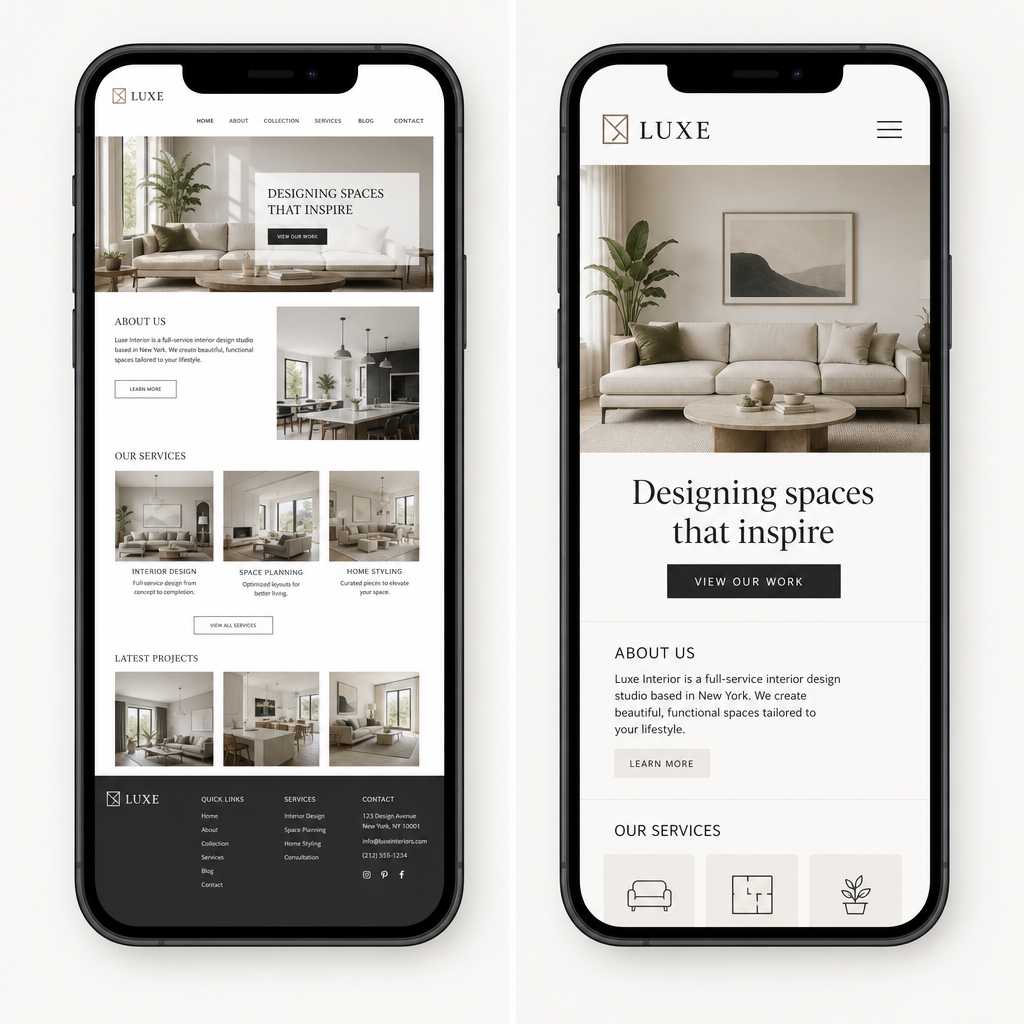
Good design is not about being trendy. It is about removing friction between a visitor and the action you want them to take. Clean hierarchy guides the eye. Whitespace makes content readable. Consistent visual language builds trust. A well-designed site communicates that you are a professional, established business before the visitor reads a single word of your copy.
This is exactly why working with a digital agency that specialises in web design Melbourne businesses can rely on produces measurable results. Garaj’s approach, for example, focuses on building sites that are not just visually current but structurally designed to convert, with clear information architecture and brand-consistent aesthetics tailored to each client’s audience.
Sign 5: You Are Invisible on Google
This is the sign that affects businesses most silently. You cannot see the customers who never found you. If your site does not appear in local search results for services you offer in Melbourne or your surrounding suburbs, you are effectively non-existent to the largest pool of potential customers searching for exactly what you do.
According to Moz, local SEO signals including Google Business Profile optimisation, on-page local keywords, and NAP consistency (name, address, phone number) are the primary drivers of local search rankings. Most small business websites in Australia are missing at least two of these three fundamentals.
The Local SEO Fixes That Actually Work
Claim and fully optimise your Google Business Profile. This means adding real photos of your team and premises, keeping your hours accurate, collecting genuine reviews, and posting updates regularly. This single action can move you into the local 3-pack, which gets the majority of clicks on local searches.
On your website, make sure your city and service area are mentioned naturally in your page titles, H1 headings, and body copy. A page titled “Web Design Services” is less effective than “Web Design Services for Melbourne Small Businesses.” This is not keyword stuffing. It is relevance signalling to Google.
Your site’s technical foundation also matters here. Proper schema markup, fast load times, and a secure HTTPS connection all contribute to how Google assesses your site’s quality. These are not optional extras. They are the baseline for competing in local search.
Comparing Your Fix Options
When it comes to fixing the signs above, small business owners in Australia typically face three paths. Understanding the real trade-offs between them will save you time and money.
| Approach | Best For | Key Limitations |
|---|---|---|
| DIY Website Builder (Wix, Squarespace) | Sole traders needing a basic web presence on a near-zero budget | Limited SEO control, template-constrained design, poor performance at scale, no custom functionality |
| Freelance Developer | Businesses needing a single specific fix or a very simple site | Variable quality, no ongoing support structure, risk of disappearing mid-project, limited strategic input |
| Digital Agency (Custom WordPress or Webflow) | SMEs and startups wanting a conversion-focused site with proper SEO, speed, and ownership of all files | Higher upfront investment, though ROI-focused agencies like Garaj structure pricing to maximise return relative to cost |
The right choice depends on where your business is and where you need it to go. For any business that relies on its website to generate leads or sales, the DIY path has a hard ceiling. You will hit it and pay more to rebuild later than you would have spent building it properly the first time.
Frequently Asked Questions
How do I know if my small business website is costing me customers?
Check your Google Analytics bounce rate. If it is above 70% on key pages, visitors are leaving without engaging. Also check your site speed score in Google PageSpeed Insights and test your site on a real mobile device. If you find issues in any of these areas, you are losing customers. The harder question is how many, and for most businesses the number is larger than they expect.
What is the most important thing to fix first on an underperforming website?
Fix mobile usability first if it is broken, because it affects both user experience and your Google ranking simultaneously. If mobile is fine, fix page speed next. These two issues combine to drive the largest share of bounce rate and lost conversions for Australian small business websites.
How much does a professional website redesign cost for a small business in Melbourne?
A properly scoped custom website from a reputable digital agency in Melbourne typically starts from around AU$3,000 to AU$5,000 for a small business site and scales up depending on the number of pages, custom functionality, and integration requirements. Agencies like Garaj are transparent about pricing upfront, which means you can scope a project to match your budget without surprises. Avoid any agency that cannot give you a clear quote after a discovery conversation.
Do I need a new website or can my existing one be fixed?
It depends on the platform and the severity of the issues. If your site was built on a modern platform like WordPress or Webflow and the problems are isolated to speed, CTAs, or content, a targeted optimisation engagement is often more cost-effective than a rebuild. If your site is on an outdated platform, uses a heavily customised page builder that bogs down performance, or has fundamental structural problems, a rebuild on a clean codebase will serve you better in the long run.
Will fixing my website actually increase sales or is this just a digital agency sell?
The data is clear. A faster, mobile-optimised, well-designed site with clear CTAs converts more visitors into leads. What changes is the ratio of visitors to enquiries. If your site currently converts 1% of visitors and a well-built site converts 3%, you have tripled your leads from the same traffic without spending a cent more on ads. That is a real, measurable return that any business owner can verify in their own analytics within 60 to 90 days of launch.
How does local SEO differ from general SEO for a Melbourne small business?
Local SEO targets people searching with geographic intent, such as “web designer Melbourne” or “plumber near me.” It relies on your Google Business Profile, local citations, and on-page location signals rather than purely on domain authority or backlink volume. For most small businesses in Melbourne, ranking well locally is more achievable and more commercially valuable than trying to rank nationally for broad terms.
What does your current website do well, and which of these five signs hit closest to home for your business? Share your experience in the comments below.
References
- HubSpot marketing and conversion statistics used throughout this article
- Moz’s guide to local SEO signals and ranking factors for small businesses
- Ahrefs blog covering page speed, technical SEO, and conversion rate research
- Statista data on global and Australian mobile web traffic share
- Forbes coverage of website credibility research and small business digital performance